Elementary Math Teaching Challenges: How Educators Are Finding Success with the Math Success Program
Struggling to teach math effectively? You're not alone—and there's a proven, affordable solution that transforms both teachers and students.
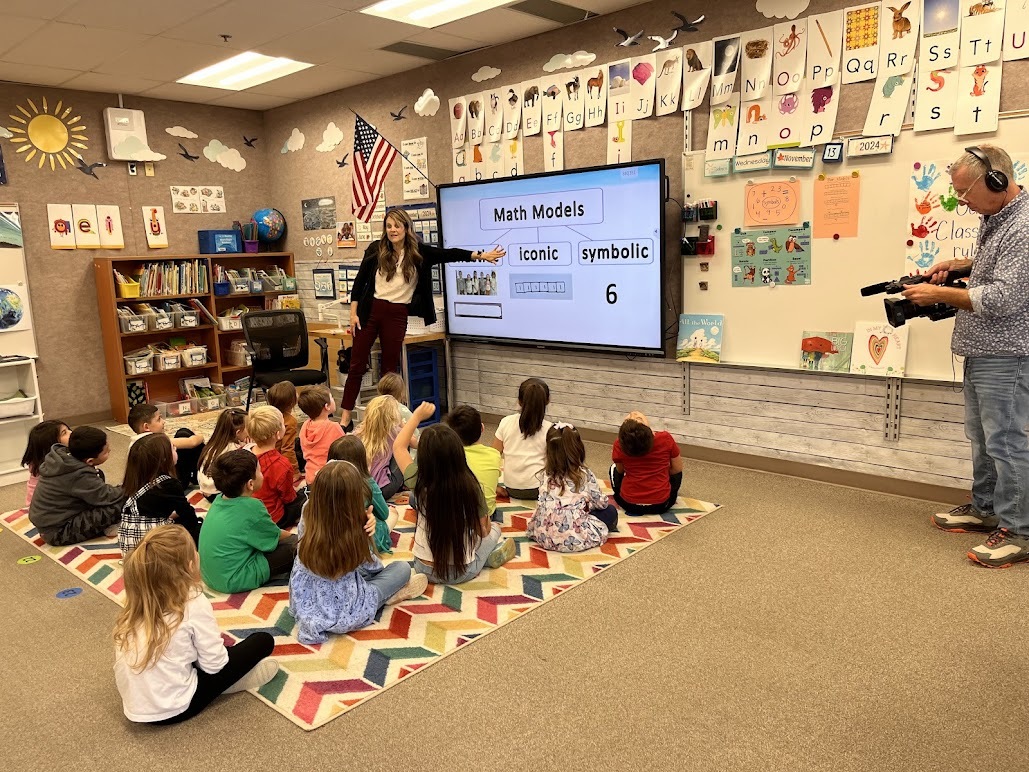
Introduction: The Elementary Math Crisis Nobody Talks About
Walk into almost any elementary school classroom on a Monday morning, and you'll find a teacher who loves their students but dreads the math block.
It's not because they don't care. It's not because they aren't trying. It's because teaching elementary math has become one of the most challenging aspects of modern education—and most teachers never received the training they actually need to succeed at it.
The Sobering Statistics
- ✅ 67% of elementary teachers report feeling anxious about teaching math
- ✅ Math proficiency rates among American students have stagnated for decades
- ✅ Teacher burnout is at an all-time high, with math instruction cited as a primary stressor
- ✅ Parent frustration over math homework has become a cultural phenomenon
But here's what doesn't make the headlines: there are solutions that work. Solutions that don't require buying expensive new curricula. Solutions that don't demand teachers spend their weekends creating elaborate lesson plans. Solutions that are both affordable and genuinely enjoyable for everyone involved.
This article explores the real challenges elementary teachers face when teaching math—and how the Developing Mathematical Thinking Institute's Math Success Program provides practical, lasting answers that transform classrooms, one teacher at a time.
Part 1: The Real Challenges of Teaching Elementary Math
Challenge #1: The Confidence Gap
Most elementary teachers entered the profession because they love children, literacy, or creative instruction—not because they excelled at advanced mathematics. Many experienced their own math anxiety as students, carrying those feelings into their classrooms.
The Impact: Students learn to fear math before they've even given it a real chance. By third grade, many children have already internalized the belief that they're "just not math people."
Challenge #2: The "Follow the Steps" Trap
For generations, math education focused on procedural fluency—memorizing algorithms and following steps without understanding why they work. Students could multiply multi-digit numbers but couldn't explain what multiplication actually means.
The Impact: Teachers find themselves reteaching concepts year after year, watching students struggle with fractions, decimals, and algebra readiness—not because the students can't learn, but because they never developed mathematical thinking skills.
Challenge #3: Differentiation Overload
Today's classrooms are more diverse than ever. In a single elementary classroom, you might have:
- Students working two grade levels behind in math
- Students ready for advanced concepts
- English language learners navigating mathematical vocabulary
- Students with learning differences requiring specialized instruction
- Children with math anxiety who shut down at the sight of numbers
The Impact: Either advanced students are bored and checked out, struggling students are left behind, or teachers work themselves to exhaustion trying to create 25 different lesson plans.
Challenge #4: The Curriculum Whirlwind
Standards change. New curricula are adopted. Administrators mandate new strategies. Teachers are expected to pivot constantly while maintaining test scores, managing behavior, and addressing social-emotional needs.
The Impact: Teachers feel like they're treading water—working harder and harder with diminishing returns. Math instruction becomes something to survive rather than something to enjoy.
Challenge #5: The Parent Communication Minefield
Remember when parents complained about "new math"? That was just the beginning. Today's parents are more involved—and more confused—than ever. They want to help with homework but don't understand the strategies their children are learning.
The Impact: Teachers feel isolated, unsupported, and blamed for systemic problems they didn't create.
Part 2: What Teachers Actually Need (But Rarely Get)
Before we discuss solutions, let's be clear about what doesn't work:
- ❌ Buying another expensive curriculum (without addressing teacher knowledge)
- ❌ More worksheets and test prep (increases anxiety, decreases understanding)
- ❌ One-size-fits-all professional development (doesn't honor teacher expertise)
- ❌ "Teacher-proof" scripts (undermines professional judgment)
What teachers actually need:
- ✅ Deep understanding of mathematical concepts themselves
- ✅ Practical strategies that work in real classrooms with real kids
- ✅ Ongoing support from mentors who understand their specific challenges
- ✅ A community of colleagues facing similar struggles
- ✅ Approaches that are sustainable—not one more thing on an overflowing plate
Most importantly, teachers need solutions that are affordable—because school budgets are tight and teachers shouldn't have to pay out-of-pocket for the professional development they need.
Part 3: The Math Success Program—A Different Approach
The Developing Mathematical Thinking Institute (DMTI) recognized that traditional math professional development was failing teachers. So they built something different: the Math Success Program.
This isn't a curriculum you buy. It's not a set of worksheets to implement. It's a comprehensive professional development experience designed by teachers, for teachers, based on decades of research into how children actually learn mathematics.
What Makes Math Success Different?
1. It Starts With the Teacher
Before teachers can develop mathematical thinking in students, they need to develop it in themselves. The Math Success Program begins by strengthening teachers' own mathematical understanding—not through abstract theory, but through hands-on experiences that mirror what students will do.
2. It's Practical, Not Theoretical
Every session includes strategies teachers can use the very next day. The focus isn't on elaborate lesson plans that require hours of preparation—it's on instructional moves that shift the entire culture of the math classroom.
3. It's Affordable and Accessible
Unlike many professional development programs that cost thousands of dollars per teacher, the Math Success Program is designed to be accessible to schools with limited budgets.
4. It's Actually Fun
Yes, really. Teachers who complete the Math Success Program consistently report that the experience was enjoyable—even energizing.
5. It Creates Lasting Change
The goal isn't quick fixes or temporary boosts in test scores. The Math Success Program focuses on fundamental shifts in how teachers understand and teach mathematics—changes that persist long after the training ends.
Ready to Transform Your Math Instruction?
The Math Success Program is designed for elementary educators who want to feel more confident teaching mathematics and are looking for practical strategies that work in real classrooms.
Contact DMTI to Learn More →Part 4: The Impact—What Changes When Teachers Complete Math Success
Immediate Changes (First Month)
Teachers report:
- Greater confidence in their own mathematical understanding
- Willingness to let students struggle productively with challenging problems
- New strategies for facilitating mathematical discussions
- Decreased anxiety about the math block
- Increased enjoyment of math instruction
Medium-Term Changes (First Semester)
Students demonstrate:
- Improved conceptual understanding
- Greater willingness to attempt challenging problems
- Better mathematical communication skills
- Reduced math anxiety
- Increased engagement during math lessons
Long-Term Changes (Full Year and Beyond)
Schools observe:
- Higher math proficiency rates
- Reduced achievement gaps
- Improved teacher retention
- Stronger parent-school relationships
- Sustainable improvement in math culture
Conclusion: A Path Forward for Elementary Math Education
The challenges of teaching elementary math are real and significant. But they're not insurmountable. With the right support, training, and resources, every elementary teacher can become a confident, effective math educator.
The Math Success Program offers a proven path forward—one that honors teacher expertise, builds genuine understanding, and creates lasting change in classrooms across the country.
Every child deserves to experience the joy of mathematical understanding. Every teacher deserves to feel confident teaching it. And with the Math Success Program, both become possible.
Ready to Get Started?
Join the growing community of educators transforming math instruction through the Math Success Program.
Contact DMTI Today →Learn More About DMTI
The Developing Mathematical Thinking Institute is dedicated to transforming mathematics education through teacher-centered professional development. Learn more about DMTI →